Honda Racing
ShareThis is disabled until you accept Social Networking cookies.
Is Kaku Ohta Honda's next big star?
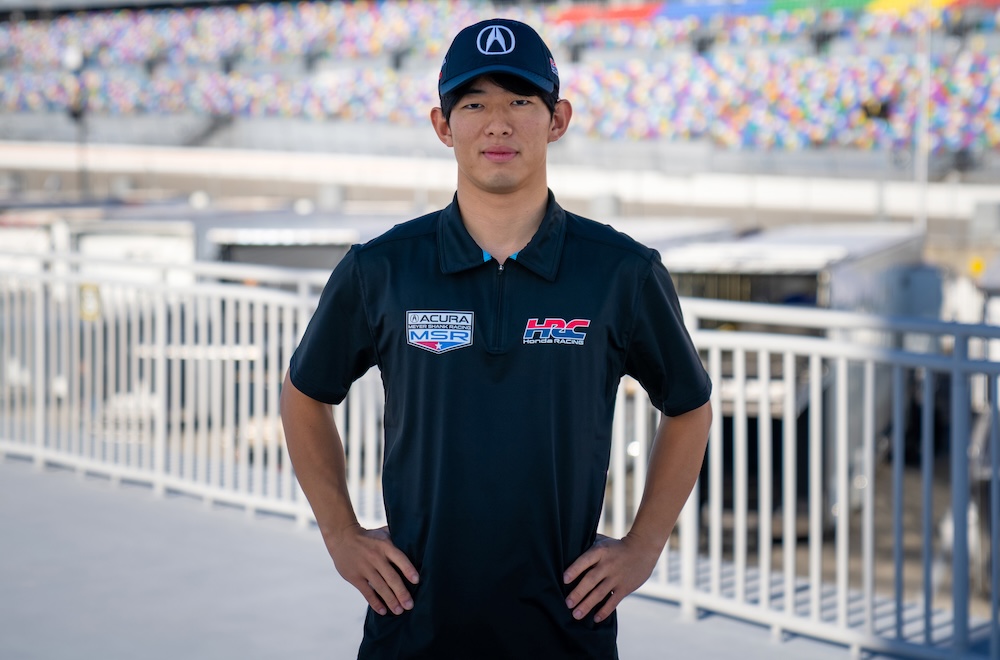
After five races in the IMSA WeatherTech SportsCar Championship, racing fans in North America have gotten to know a little bit about Kakunoshin Ohta, the young man who’s being touted as Honda’s next homegrown racing superstar of the international circuit.
He goes by “Kaku” here in the U.S., the way Toranosuke Takagi became “Tora” a generation or two ago – and thanks to his time studying in an international school during his childhood, he’s as fluent in English as many of the other IMSA drivers whose first language is something else.
Unless you were like me and spent several weekends staying up late to watch him race in either of the two biggest racing series in Japan – Super Formula in single-seaters, and Super GT in sports cars – then you likely wouldn’t have known who Ohta was when the 26-year-old Honda factory racing driver was first announced as a part-time driver for Meyer Shank Racing in IMSA.
“At the time I heard about it (last October), it was amazing to hear that,” Ohta recalls when describing how Honda told him about his new assignment. “I told them, I want to be an international driver. I don't want to stay in Japan for my whole career.
"I fully agree that the Japanese fans and the Japanese racing atmosphere are amazing as well – and I love that. But for living as a racing driver, I want to challenge in a different country and fight against the top-level drivers around the world. I continued to tell Honda, and then finally, they gave me a chance.”
Driving the HRC-engineered No. 93 Acura ARX-06, Ohta made his North American racing debut in the Rolex 24 At Daytona. He also drove for MSR in the six-hour endurance races at Watkins Glen and Indianapolis, and to gain even more experience in IMSA, Ohta drove for Indy-based Era Motorsport in the LMP2 class at Sebring and Road America.
It didn’t take long into his new journey for Ohta to appreciate the high level of competition that IMSA offered.
“I hadn't seen a lot of races in IMSA, but I know that this competition is so tough and competitive," Ohta says. "And after I came to this series, that thought hasn't changed. This series is so tough, and a lot of top drivers from all over the world come here. And to fight against them, it's so fun.
It didn’t take long for Ohta to appreciate the passion of the North American racing fans either, comparing it warmly to the enthusiasm of Japan’s motor racing otaku. “I like the atmosphere – the people are great,” he said.
“The Japanese fans are some of the best in the world, I think. And here (in America), the fans are very open-minded. They're also so open: The distance between the drivers and the fans is closer than in Japan, so it's great. It's hard to judge which is better, of course, but the fans make the atmosphere, both in America and Japan.
“In Japan, the track is so small and there's not a big space to put your RV inside the track. So the fans are pure racing fans. Here, the fans are big fans of racing, but also, they're spending a good time in the racing, and they're having a beer and doing a barbecue out there.
“I love this atmosphere. We are doing racing and sports, but also entertainment. I look at the fans spending a good time at the track, and I feel really happy with that.”
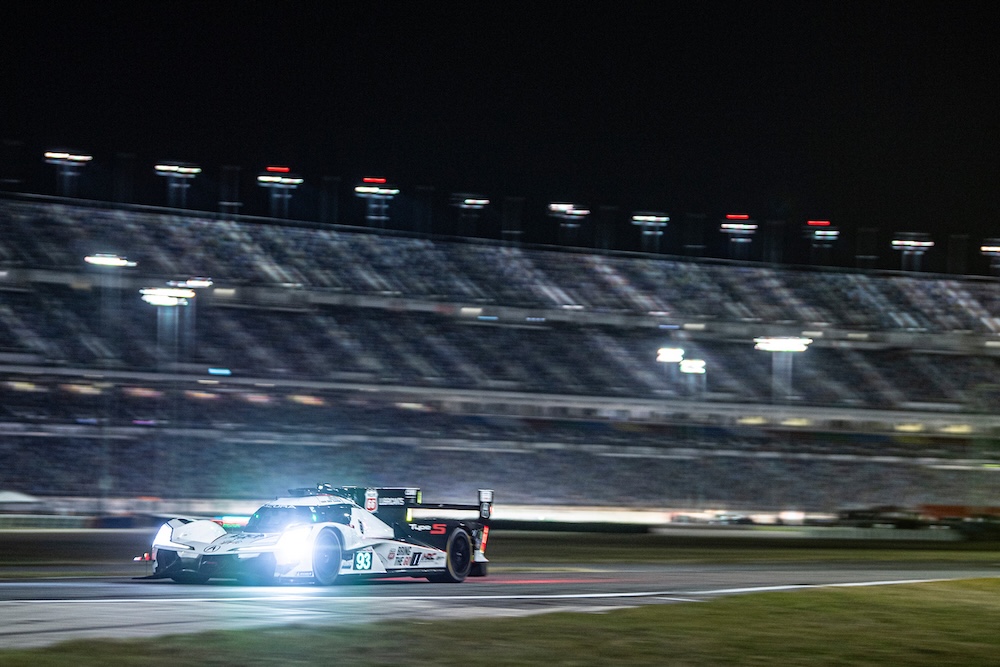
Ohta made his IMSA debut at this year's Rolex 24 in the HSR-run Acura GTP. He's still part of the team's endurance line-up, and has also added some LMP2 action with Era. Brandon Badraoui/IMSA
From Daytona to Indy, Ohta showed flashes of the talent that’s made him one of the top stars of the Japanese racing scene. He got to lead a few laps at Daytona early in the 24 Hours. He enjoyed some attention-grabbing battles for the lead with Romain Grosjean at Watkins Glen and Frederik Vesti at Indianapolis. On his LMP2 side-quest, he was in the thick of a hot-blooded battle for a podium at Road America.
Unfortunately, Daytona unraveled due to a suspension failure on the No. 93 Acura, and the way late race tactics unfolded at Watkins Glen and Indy kept Ohta from his first IMSA GTP podium. Ohta also lost out on a maiden LMP2 podium at Road America due to a small mistake near the end of what could best be described as a combative race.
But even still, there’s a feeling that he’s done quite well for learning five brand-new circuits and two brand-new types of cars, the Acura ARX-06 LMDh and the ORECA 07-Gibson LMP2, compared to what he was used to in Japan.
“It's difficult to explain,” Ohta said, as he tried to put into words the differences between IMSA’s GTP and LMP2 classes, and Super GT’s top class, GT500, which features open tire competition (a rarity in modern motorsport) and ultra-high-grip tires built for sprints. “The grip is massive, especially on cold days," he says. "In Suzuka, a GT500 can do 1m43s – it's just so fast. The car has big downforce as well.
“We are driving instinctively, so there's no specific stuff to change for the driving side. But we also need to adjust our driving and think about what's better for the car. In GT500, you have to rely on the tires more than the downforce. How much you rely on the downforce or tires is different, I think. For the GTP, I concentrate on using the downforce more than the tires, because the endurance tires have less grip. That's the biggest difference between them, a lot of the time.
"I've never done such sophisticated racing as GTP. The GTP class has a lot of people that are engaged in the racing, the driving, data, manufacturing, a lot of stuff – building together for one goal. There's almost 100 people who work together. That number is massive, it’s almost more than double that in GT500! Working with this number of people for one team, with one goal, it's so nice.
“And we can use the telemetry system, which is not allowed in GT500. That's sophisticated, and also good for my driving development. And also, I need to do a lot of things I've never done before, like driving with all the systems in my steering wheel, so that's fun.”
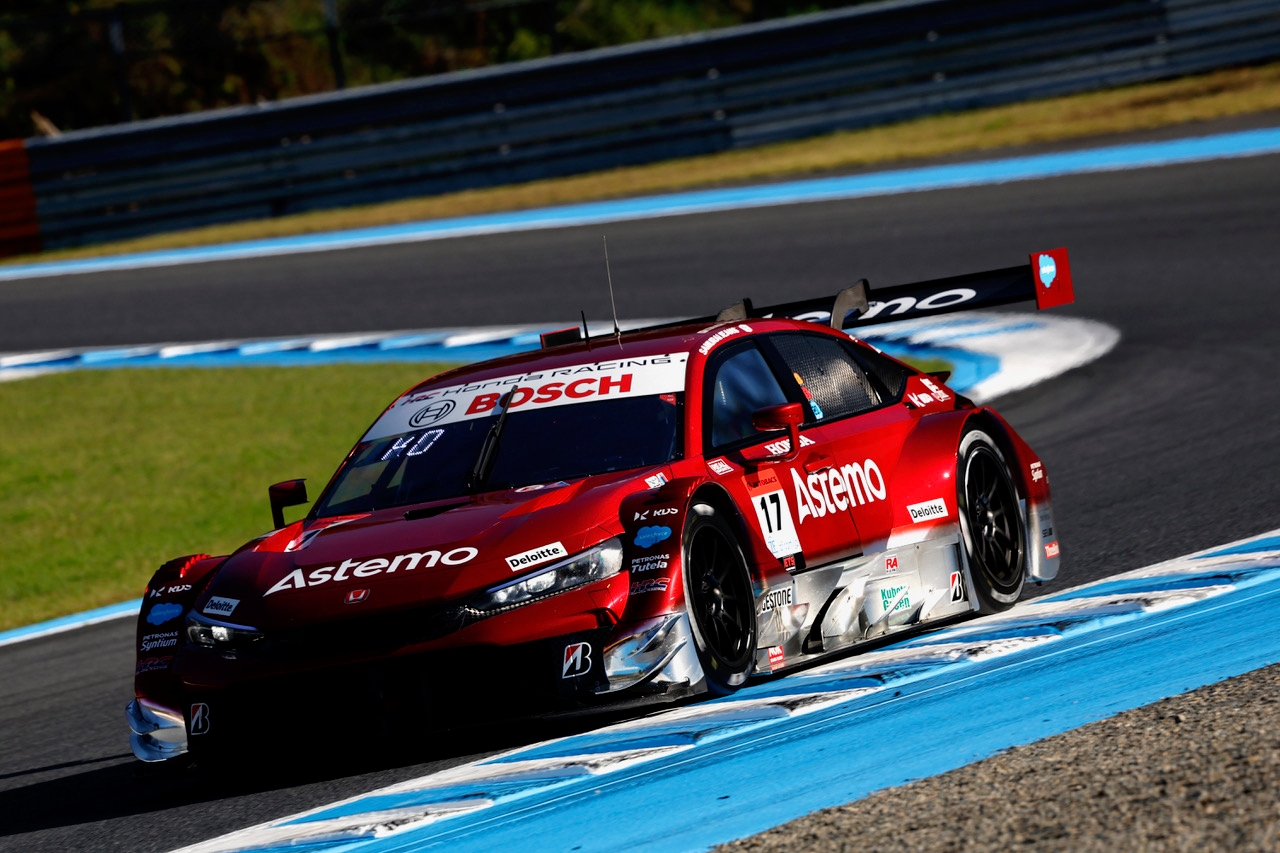
The ultra-quick Super GT cars make a lot of their lap time through their tires, as opposed to the more downforce-reliant GTP cars. Photo by Honda Racing
Ohta has also experienced pleasure in driving the relatively simple ORECA LMP2.
“The fastest drivers are in LMP2 as well: We use the same chassis, the same parts, and so there's almost no difference between the teams. I feel that LMP2 is pure racing,” he says.
“We can push this car really hard, this car has less weight than a GTP. It feels like something close to a Formula 3 car. And we have less systems in this car, so it's more dependent on the driver for the speed and time.
“I love this car, it's very fun, and then doing the race with Bronze and Silver drivers, their passion for racing is really nice. My team, Era, is very good as well. It's really good to get to know the track and then drive this car.”
While jumping between IMSA’s two prototype categories, Ohta has also been hard at work competing for a title in his third year of racing in Super Formula. He drives for Dandelion Racing, a small but mighty team based near Ohta’s home in Kyoto, with only 25 full-time staff but multiple series titles.
Japan’s Top Formula category is seen as the Eastern equivalent to the NTT IndyCar Series in terms of structure and professionalism. Not only has it cemented the legends of Japan’s greatest drivers of all time, but it’s been a launching pad for top international talent as well, with Álex Palou being just the most recent success story to come out of Super Formula.
2025 has been Ohta’s best season to date, capturing three wins, at the opening round in Suzuka, and then at Motegi and Fuji, proving that he can win outside of Suzuka.
“I've been performing well,” Ohta said of his Super Formula campaign.
“I've had speed not only in Suzuka, but all the other tracks. Same as last year – I was P2 in Quali at Motegi and also the Fuji round (in July). I was showing the speed not only at Suzuka. In my point of view, I've always had a big chance to win races at other tracks. I'd won four races in Suzuka, but I just couldn't win at races like Motegi and Fuji until now.
“There's no big breakthrough for me, it was just a matter of timing, and a lot of other stuff. But for sure, we are getting stronger every year, and this is only my third year in Super Formula. I'm thinking that if I'm going to stay in Super Formula next year, I'm going to win more races than this year, because we're getting stronger and stronger.”
He currently sits a close third in the championship with two double-header rounds, one at Fuji and one at Suzuka, to go. Only Sho Tsuboi, the 2024 Super Formula and GT500 Champion, and Red Bull-backed Ayumu Iwasa are ahead of him in the standings. And Ohta already feels the benefits of his international racing experience in his third year of Super Formula.
“You can ask the guys in Super Formula, but I've been performing well with very good race pace," he says. "I feel like that skill and performance came from my experience in IMSA,” he says with confidence. “Here (in IMSA), you have to drive really consistently. Sometimes you have to go fast, but you have to save your tires, energy, a lot of stuff – and you have to manage it. That kind of knowledge and experience has helped me a lot in Super Formula as well.”
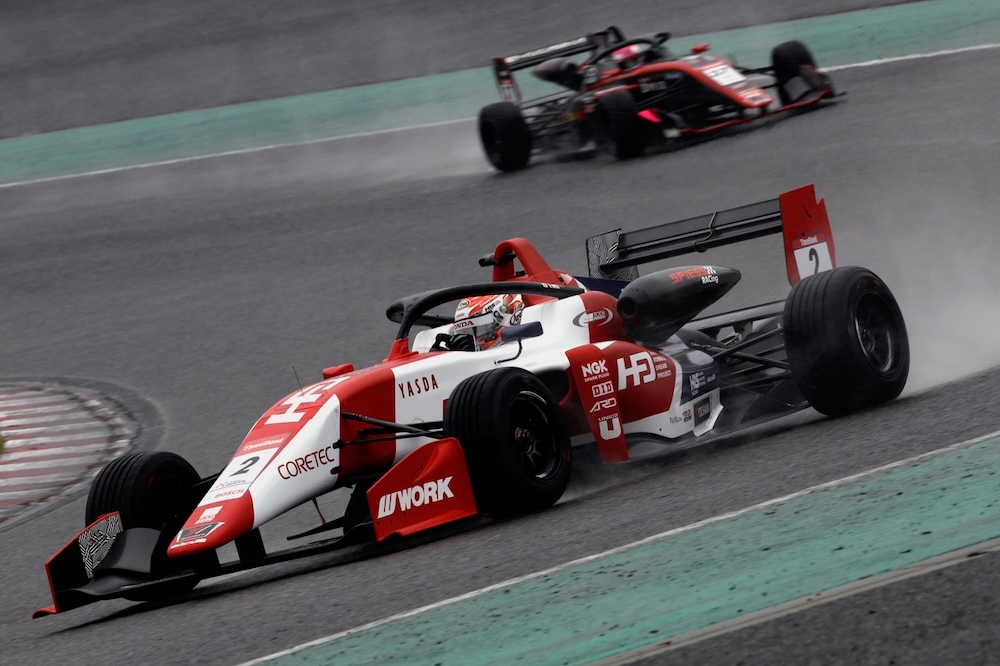
Ohta's IMSA forays have taught him some tricks that have proved valuable in Super Formula. Photo by Honda Racing
Ohta’s busy schedule has also included trips to the Grand Prix of Long Beach and the Indianapolis 500 as a guest of Honda, to further immerse himself in the culture of American motorsport. It’s also included supplemental GT3 races in Japan at events like the prestigious Suzuka 1000KM, where Honda’s exit from the category has allowed him to drive a Mercedes-AMG GT3 EVO for a top Hong Kong team, Craft-Bamboo Racing.
To get used to working with a foreign team and communicating in English, Ohta started driving for Craft-Bamboo last season in the Super Taikyu Series, Japan’s amateur-driven endurance championship.
“I tried to tell them, ‘I want to race with you guys, for preparation - whenever I get a chance to go to America with a Honda program, I need to be more suited with English radio and other things,’” he recalls.
“That was a big thing. I proved that I can work with a foreign team – as you know, English is the highest barrier for a Japanese driver.”
What’s incredible about Ohta’s rise is how unlikely it all seemed just a couple of years ago.
In his early single-seater career, Ohta had to fight up the depth chart of the Honda Formula Dream Project (HFDP), the manufacturer’s domestic young driver program. Honda actually considered dropping Ohta after three seasons of underwhelming results in the FIA F4 Japanese Championship.
But after outperforming expectations in 2022, when he finished as the Super Formula Lights (formerly All-Japan Formula 3) runner-up and captured two GT300 podiums in SUPER GT – plus a very memorable battle for fourth at Motegi – Ohta got his promotion to Super Formula and GT500 in 2023, as a full-fledged Honda factory driver.
On March 3rd, Ohta was testing his GT500 Honda NSX-GT when he had an accident at Suzuka, which threatened to derail his top-level racing career before it even began.
"I crashed at the 130R (Corner) at almost 240 kilometers per hour (150mph), because of a tire puncture,” as Ohta recalled. “That was a scary moment, and I got injured.”
Ohta walked away initially, but suffered a back injury that kept him in the hospital overnight. The pain went away after two weeks, but the crash had a detrimental effect on his performance for several months.
Without a pre-season test in the new Dallara SF23, Ohta finished no better than 15th in the first five races and was looking like a driver who’d be one-and-done in Super Formula.
“For more than half of the season, it was so tough,” he said, “and I was so upset that I couldn't drive as fast as I could.
“Everyone knows how fast I was in [Super Formula Lights], but no one knows how this guy can do in the Top Formula. And nothing can prove it before you have good races, get a podium, or a win. I always thought that I needed to prove my ability to do that. But every race, I couldn't do that; it was like spinning down, down, down.
“And then after that, I got more confidence – at the last round of the season, I won at Suzuka. And (Liam) Lawson was second, so that was good for me.”
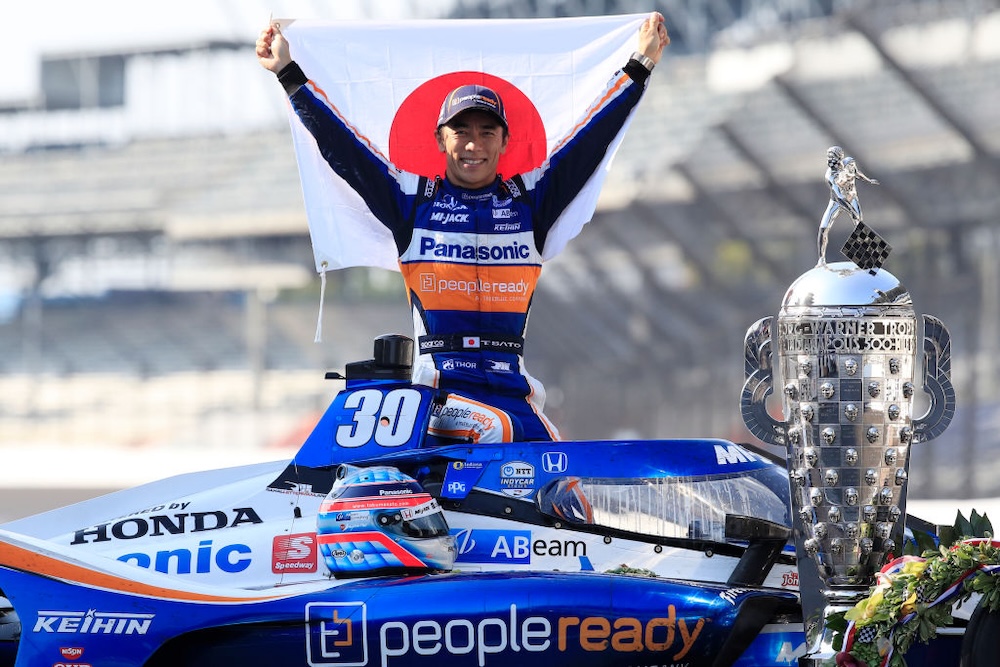
Ohta has aspirations of following in the footsteps of homegrown Honda hero Takuma Sato, although that depends in part on the strength of Honda's IndyCar ties in the coming years. Andy Lyons/Getty Images
Ohta’s struggles of the past seem to be a distant memory now. He went from seventh to fourth in the Super Formula Championship last season, sweeping the season-ending JAF Suzuka Grand Prix double-header, and has taken another step forward.
In GT500, Ohta captured three podiums – one driving for Nakajima Racing in 2023, and two for Real Racing in 2024. He might have 'graduated' from Super GT as a race winner last year, if not for some hard luck and the general inconsistency of the Honda Civic Type R-GT, which will be replaced next year.
As someone who looks up to the two-time Indianapolis 500 winner Takuma Sato with great respect and admiration, and got to see the legend turn back the clock this May at this year’s Indy 500, Ohta has made it no secret that he wants to follow in his footsteps and race in IndyCar.
Monday’s announcement that Meyer Shank Racing would furnish his first IndyCar test at Mid-Ohio brings Ohta one small step closer to that goal, even if it’s just a one-off for now. MSR already has Felix Rosenqvist and Marcus Armstrong signed for 2026, and Ohta has even said he wants to win the Super Formula title next year, giving him at least two opportunities to become a champion.
“IndyCar has always been one of my biggest goals,” Ohta reiterated. “I have to figure out what I can do with Honda, and then with the sponsors, I'm not sure if I can get it.
“I'm happy to say that a lot of Japanese fans are waiting for the next Japanese IndyCar star. I hope one day it will happen, but I definitely have to work a lot for that. I just have to perform, and then take the championship in Super Formula – that's the one where I want to break through.”
Ohta’s need for sponsorship to make that happen isn’t the only potential hurdle that he faces, though: Honda’s uncertain future in IndyCar after 2026 hangs overhead like Damocles’ sword, and if Honda leaves, its incentive to support Ohta’s IndyCar ambitions would become virtually zero. Ohta politely declined to comment on the topic.
While Honda has yet to announce its plans for the upcoming season, and MSR has only just confirmed it will return to IMSA with two cars next year, it’s almost certain that, as we head into October 2025, Ohta will return for his fourth season in Super Formula and a second season in IMSA.
Fortunately, there are no clashing dates between Super Formula and IMSA next season, which would even allow him to run both series full-time – or at the very least, would allow him to run all five Michelin Endurance Cup events, and also get more IndyCar testing opportunities as his schedule permits.
“I'm a Honda factory driver, and so I have to always think about what I should do, what I want to do, and what Honda wants me to do. But I'm happy to say that the people in Honda always support me a lot, and they respect what I want to do,” Ohta says.
Since the beginning of Sato’s seemingly everlasting career twilight, a handful of young drivers within the Honda camp have been rumored as “the Sato successor” under the presumption that Honda would be keen to have a new homegrown driver in IndyCar.
But Ohta has the most desirable combination of a specific aptitude, driving ability, and American racing connections out of all the names put forward – even above Yuki Tsunoda, who is grappling with his own uncertain racing future after 2025.
Kakunoshin Ohta, meanwhile, will have the opportunity to apply the skill and speed he’s showcased in Super Formula, and in two of the highest levels of sports car racing worldwide, in his first IndyCar test.
If you didn’t know who he was this time a year ago, you’ll be hearing more of him very soon.

Topics
ShareThis is disabled until you accept Social Networking cookies.

RJ O’Connell
Read RJ O’Connell's articles
Latest News
Comments
Disqus is disabled until you accept Social Networking cookies.